
All shells are golden
Walnut Trees in Latvian Gardens – Is It Possible?
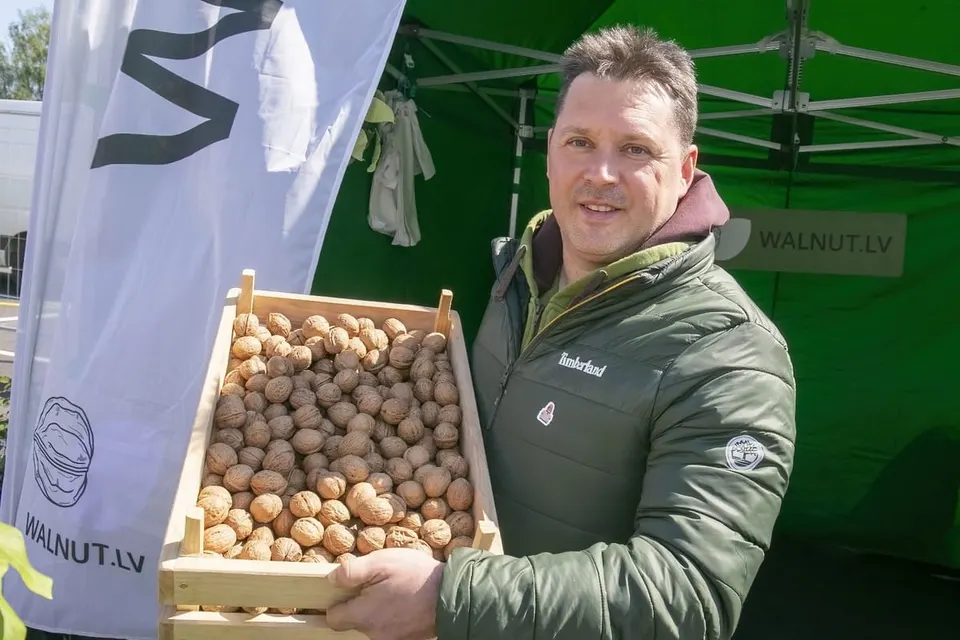
Eduard Ostrobrod is ready to fill Latvia with walnuts.
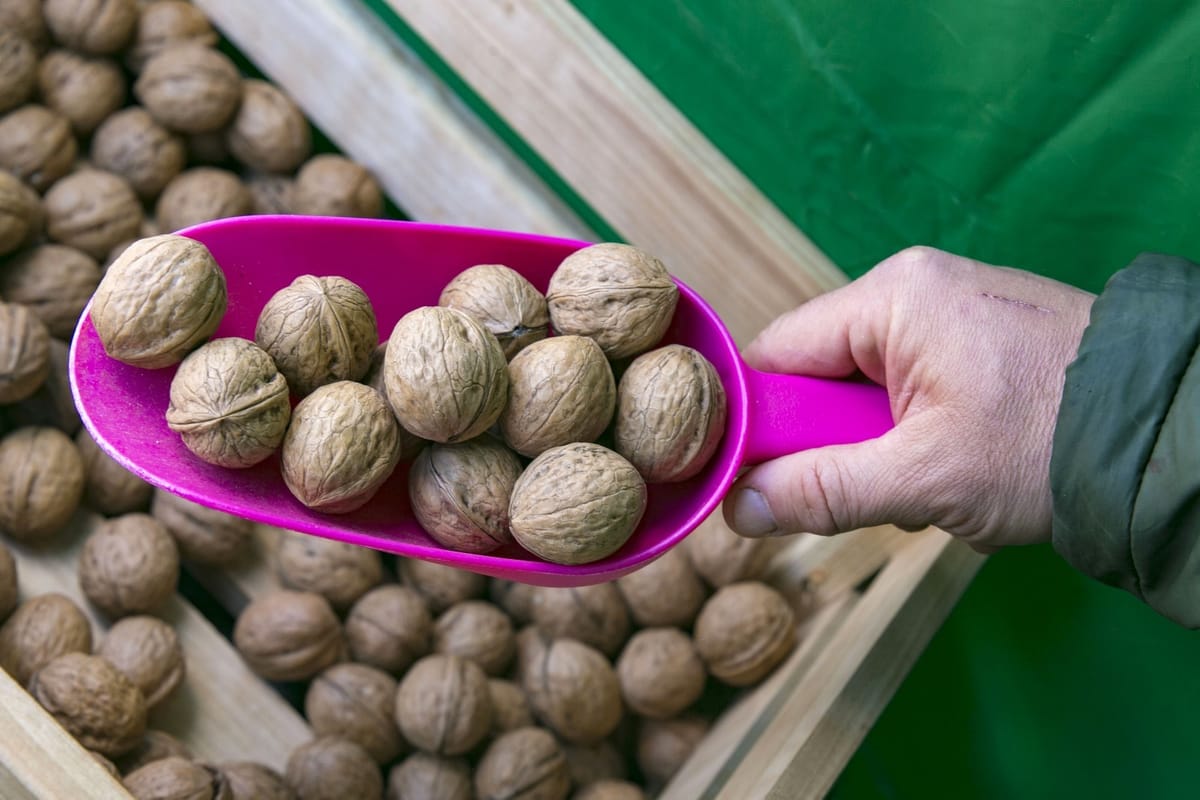
Walnut trees are not the most common sight in Latvian gardens, but more and more gardeners are trying to grow these sprawling trees on their plots. In an interview with Eduard Ostrobrod, the owner of Walnut.lv nursery, we talked about which varieties are suitable for the local climate, how to care for seedlings, and what harvest to expect.
The walnut is not only a tasty and nutritious product but a true treasure for health. Rich in vitamins, antioxidants, and healthy fats, it strengthens the heart, improves brain function, and helps reduce stress. Growing your own tree means not only enjoying the harvest but also having a beautiful, powerful plant that will bear fruit for decades.
Especially in light of store prices, since walnuts are far from cheap. Though not widespread, walnuts have been growing in Latvia since the times of the Baltic Germans, who planted them on their estates.
Most often, these are trees of the species Juglans regia. They are cultivated commercially and are still found in city parks as ornamentals.
Walnuts were promoted in Latvia by renowned breeder Professor Gunvaldis Vesminš, who spent many years working in Moldova. He bred grape and cornelian cherry varieties adapted to Latvian conditions. The walnut was his third dream crop to establish in Latvia. Shortly before his passing, he donated his best cold-hardy walnut varieties to Cirava parish, where they continue to produce harvests to this day.
Some of his seedlings ended up in private collections, and the idea of making Latvia a “walnut country” faded for a while. Though seedlings are still available — several nurseries offer them for sale.
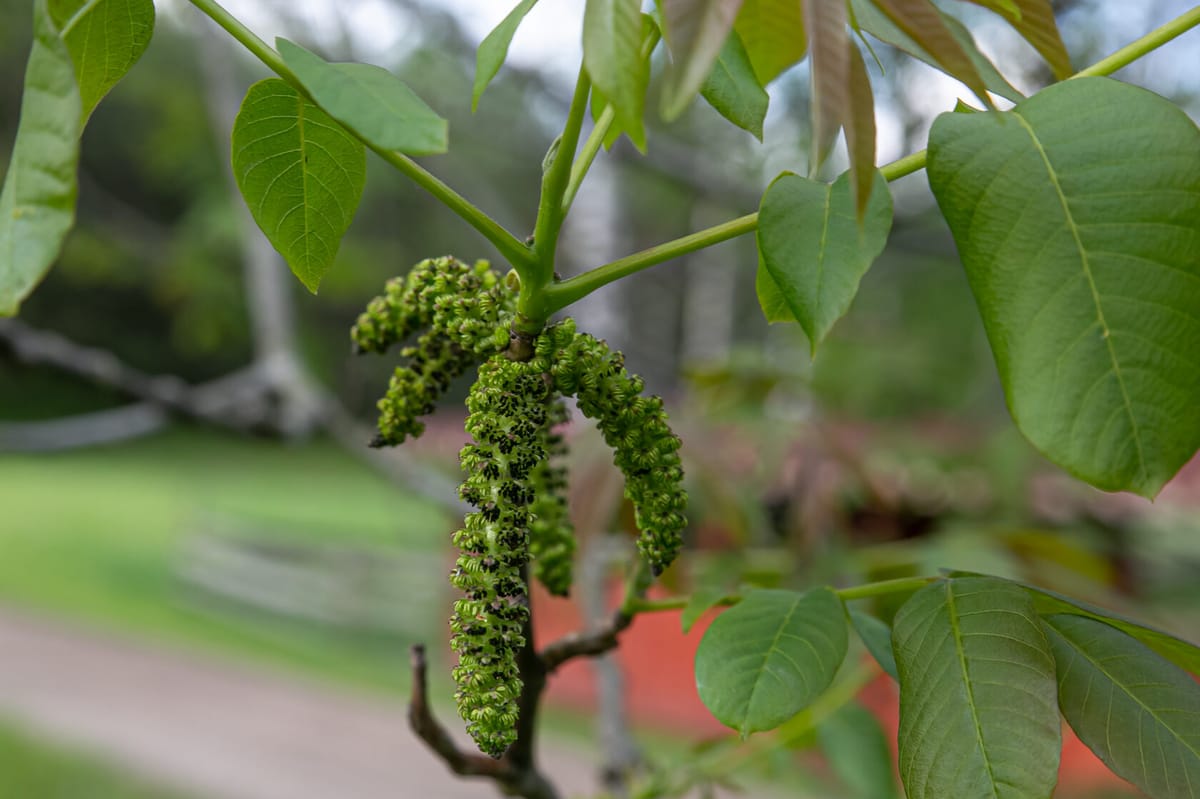
Revival in Kuldīga
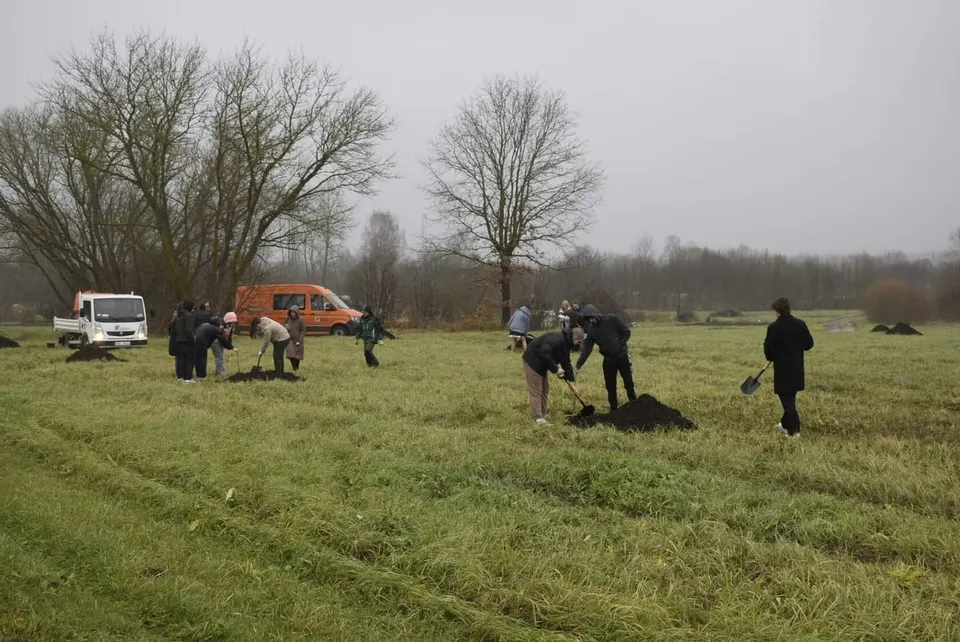
Last year in Kuldīga, Walnut.lv established the first public walnut orchard — forty young trees. Eduards Ostrobrods, head of the company, sees it as a successful beginning. The business specializes in seedlings and is ready to donate trees to Latvian cities and municipalities — so that residents can harvest walnuts for free and green up their communities. Eduards firmly believes that walnuts can grow all over Latvia and become part of the national agricultural landscape.
Walnut.lv grows its seedlings in Renda parish, Kuldīga region. The first trees were planted 13 years ago, and now they are producing commercial yields. For small gardens, suitable varieties can be chosen. As Eduards explains, the choice of variety affects care, taste, and the time to the first harvest.
This summer, on July 25, Walnut.lv is organizing a free seminar for clients in Kuldīga, open to anyone interested in learning about walnut cultivation.
“We will declare Kuldīga the walnut capital of Latvia! We’re grateful to the municipality for supporting us and providing a venue for the seminar,” said the nursery owner. Recently, regional television aired a report about Latvia’s first walnut orchard — showing trees waking from winter. All survived, though fewer than the original 40 remained… Some were stolen, prompting a police investigation. The nursery quickly replanted — the city orchard lives on!
“We source our walnut varieties from Moldova,” Eduards told MK
"Back in Soviet times, the fruit-growing institute there was tasked with developing frost-resistant varieties for the entire country — supposedly on Stalin’s orders, as walnuts are a national tree in Georgia, where he was from. The USSR collapsed, but dedicated walnut growers remained. This allows Walnut.lv to work with a Moldovan nursery and purchase seedlings."
But importing seedlings is only half the job. Once brought to Latvia, they must survive the winter before being offered to customers. The farm now has its own orchard and handles grafting. Cultivated varieties are grafted onto hardy wild walnut rootstock grown in Latvia.
How Hardy Seedlings Are Grown
Can you grow a walnut tree from a nut? Yes. That’s how Walnut.lv grows seedlings for grafting. Only nuts from trees are suitable — store-bought walnuts won’t sprout because they’re heat-treated to prevent mold. From planting to ready seedling takes one or two years, depending on summer conditions.
The seedling is dug up, pruned, and grafted with a cutting from a mother tree. It spends 28 days in a warm room to let the graft take, then moves to a cold shed for two weeks of stratification, and finally is planted outdoors for up to two years of further growth. That’s how cold-hardy cultivated walnut seedlings are produced.
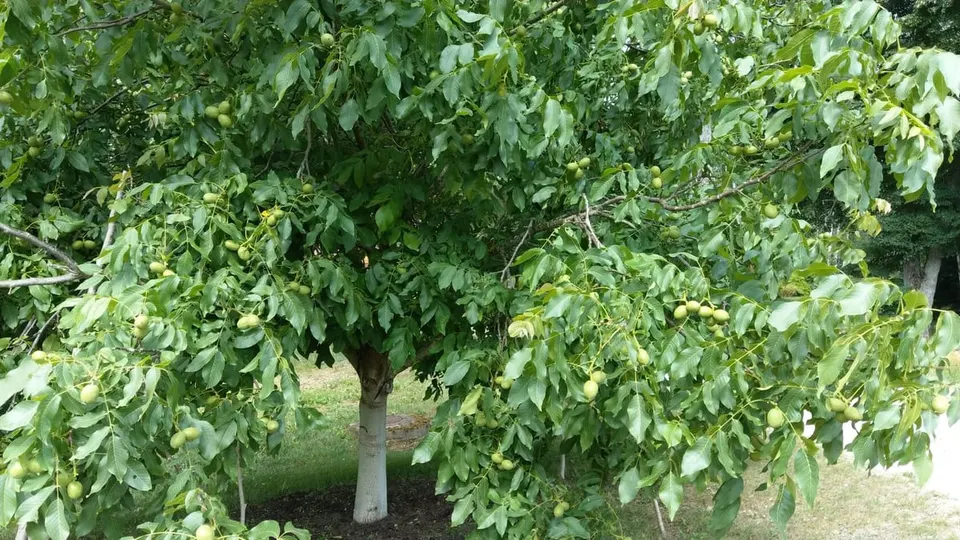
"You know the difference between wild and cultivated walnuts?" Eduards asks. "This two-year-old tree already has nuts. Wild walnuts usually fruit in their 8th or 9th year. Cultivated trees start in the 4th or 5th year. The variety ‘Peschansky' even fruits in its second year — this one was grown in a greenhouse pot, specially for showcasing at an exhibition."
A Tree for Life
Early fruiting isn’t the only trait of cultivated walnuts. The commercial ‘Peschansky' variety has a thin shell — you can crack it with your hands. The kernel makes up 65% of the nut’s weight. Another variety, ‘Ovato', is not grown commercially due to its thick shell, which makes drying difficult and can cause mold. But it’s very cold-hardy and flowers late, making it ideal for harsh climates.
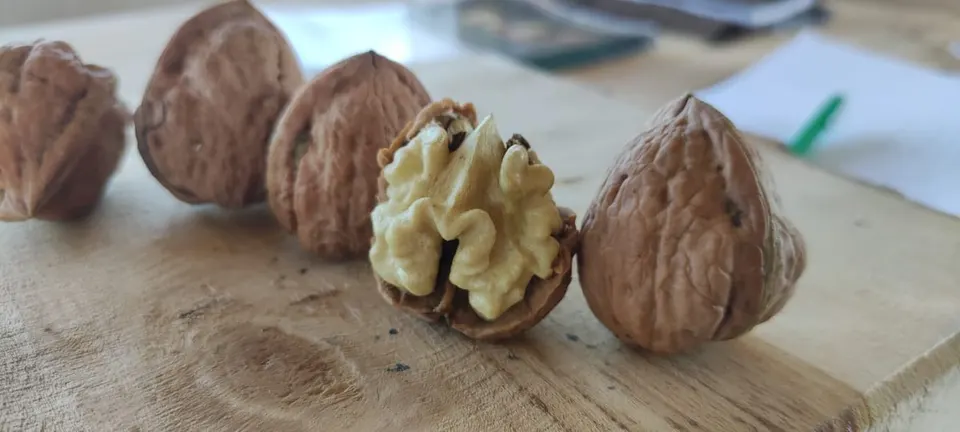
The Chinese variety ‘Rubin' is notable for its red-skinned kernel. Well-known in Romania, it grows successfully in Latvia too. Walnuts are best planted in spring or autumn. That’s why the Kuldīga nursery prefers to sell seedlings during these seasons, when they establish best. By fall, the nursery typically offers over 35 varieties adapted to Latvian conditions.
Where and How They Grow
Walnut trees have separate male and female flowers. The best yields come when their flowering times coincide. Most customers buy 2−3 trees of different varieties. Walnuts are self-pollinating, but male and female flowers don’t always bloom at the same time.
"If your trees are within 50 meters of each other, one tree can pollinate another via wind," Eduards explains. "That increases your chances of a big harvest." Popular varieties include ‘Peschansky', ‘Kostyuzhansky', and ‘Ovato'. They vary in height.
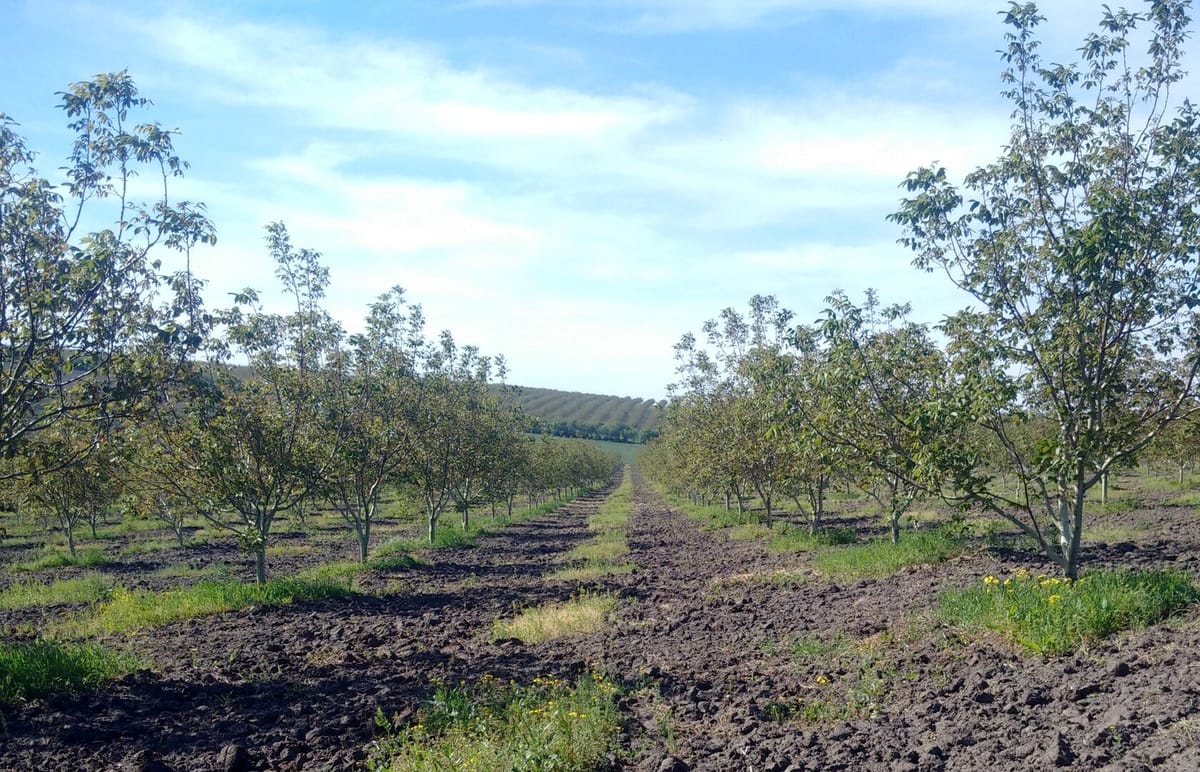
‘Kostyuzhansky’ can grow 12–13 meters tall. But, as Eduards says: “That’s what pruning shears are for.” Cut the top, and the tree will grow wider instead of taller — the gardener decides the shape. The tree should be planted once and for all — walnuts dislike transplanting.
They need a sunny spot and groundwater deeper than two meters. They’re not picky about soil — they grow wherever fruit trees grow. But avoid pure sand (like Jūrmala's) or swampy clay where water stagnates after rain.
"If your soil isn’t great, dig a hole one meter wide and deep, fill it with black soil, and plant there," advises Eduards. "The walnut will root in that, and later reach deeper layers. In the first year, no fertilizer is needed. Just lay turf at the bottom of the hole — it will decompose slowly and provide potassium and phosphorus." Water twice a week with 8 liters per tree — especially in dry summers over +25°C.
Walnuts have one curious trait — almost nothing grows under them. So when planting, leave 5 meters of free space around the trunk.
Walnut.lv is now researching this feature with the Latvian Wood Institute, hoping to develop a natural herbicide from walnut compounds.
Caring for the Crown
After planting, prune the seedling to 60–70 cm to stimulate side branches. Shape the tree like a vase. One shoot will grow upright — cut it in spring to get more lateral branches. Prune at a 45° angle.
Repeat the process the following year. You’ll end up with three tiers of side branches — the tree’s framework. Unlike plum trees, walnut side branches never grow inward, which makes maintenance easier.
What to Do with the Harvest?
Walnut growers say squirrels often help with the harvest. But there’s enough for everyone.
Eduards explains how to dry walnuts properly:
“If you don’t have a professional dryer, spread the nuts in a thin layer in the sun or attic. Turn them every few days.
The process takes 2–3 weeks. To check if they’re dry enough, crack one open — the kernel shouldn’t be moist.”
Publication date: June 18, 2025


