Walnut.lv

Agrotechnology is the foundation of growing walnuts

It determines your success and whether you can grow a productive walnut orchard

Planting a walnut tree is not difficult, but certain details must be observed

Here’s how the planting process looks like:

  1. (01)Choosing a planting scheme

    The type of fruiting characteristic of the selected sapling significantly affects the size of its crown. There are planting schemes that consider future thinning, which can help shorten the payback period. However, these methods require more complex agricultural techniques and future costs for uprooting. Soil quality and irrigation potential are also crucial. Walnuts prefer loamy or sandy loam soils with a high organic matter content. The soil must be well-drained. Walnuts are sensitive to high water tables. Ensure that the groundwater level is at least 1.5 meters (approximately 5 feet) below the surface.

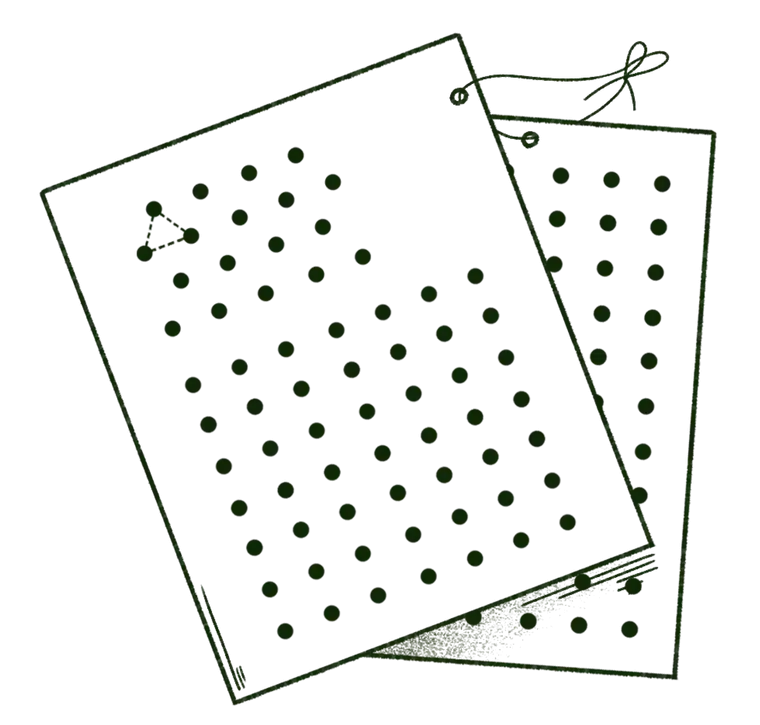
    Sheets with seedling planting schemes
  2. (02)Marking and preparation for planting

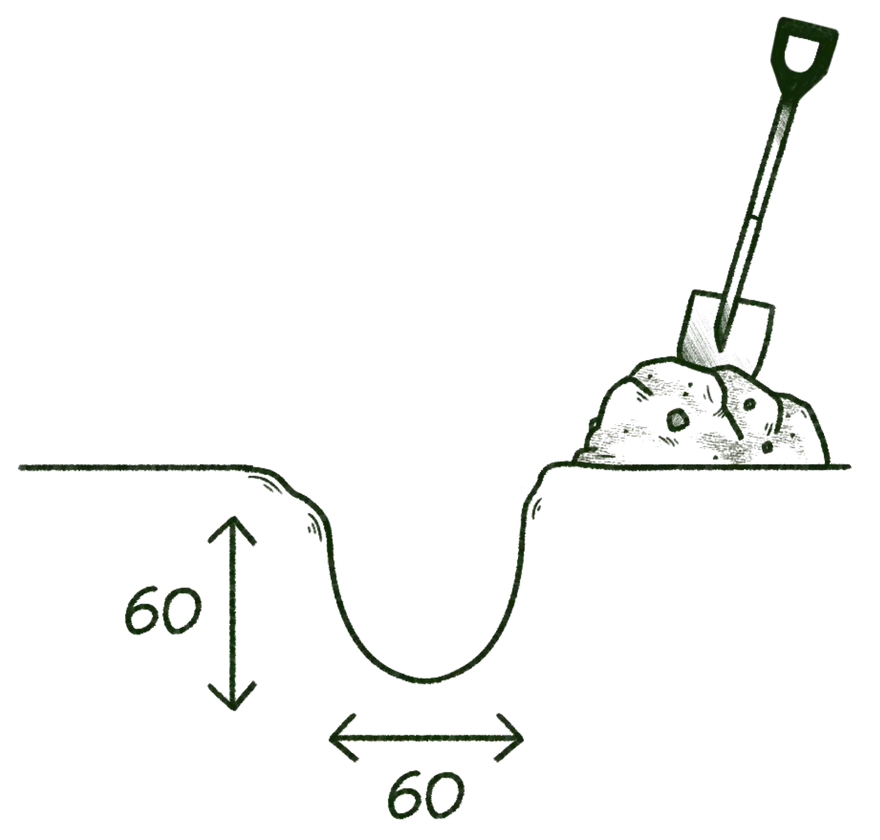
    Walnut trees thrive in sunlight, so choose locations with good exposure throughout the day. Ensure the area is well-ventilated and protected from strong gusts of wind. We recommend digging planting holes before the saplings arrive. Mark the spots where the saplings will be planted. The ideal spacing is 10×10 meters, meaning 10 meters (approximately 33 feet) between rows and 10 meters between individual saplings. Once the planting spots are marked, begin digging the holes. Each hole should be approximately 60 centimeters (about 24 inches) wide and 60 centimeters deep.

    A planting hole 60 centimetres wide and deep, and a shovel
  3. (03)Planting

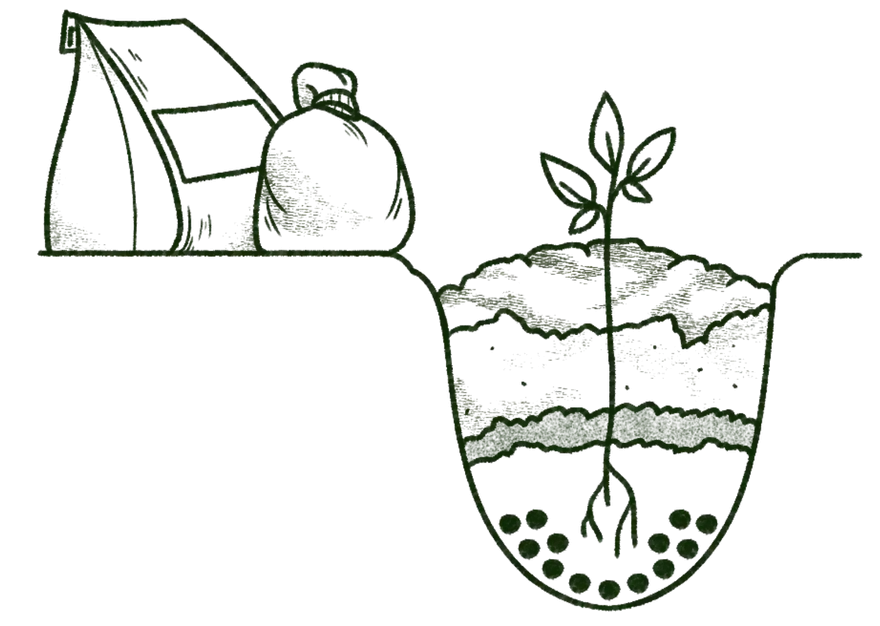
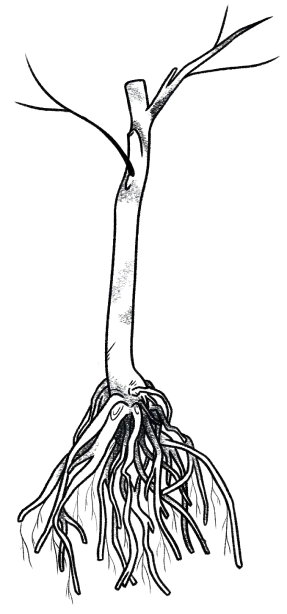
    Before planting, it is essential to thoroughly whitewash the entire above-ground portion of the sapling. Proceed with planting by creating a small mound and carefully spreading out the roots. Cover the roots with quality soil, and then add a 20 cm (approximately 8 inches) layer of fresh strawy manure on top.

    A seedling in the planting hole with its roots spread over a mound
  4. (04)Watering

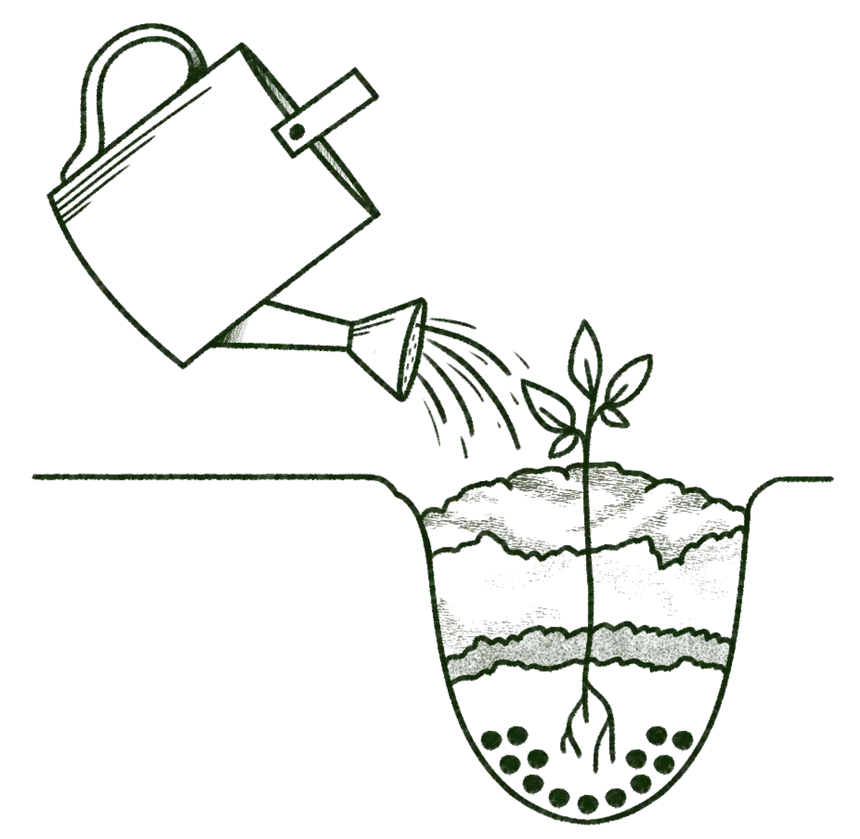
    Water the planting holes generously, using at least 20 liters of water.

    Watering the planting hole from a bucket
  5. (05)Staking

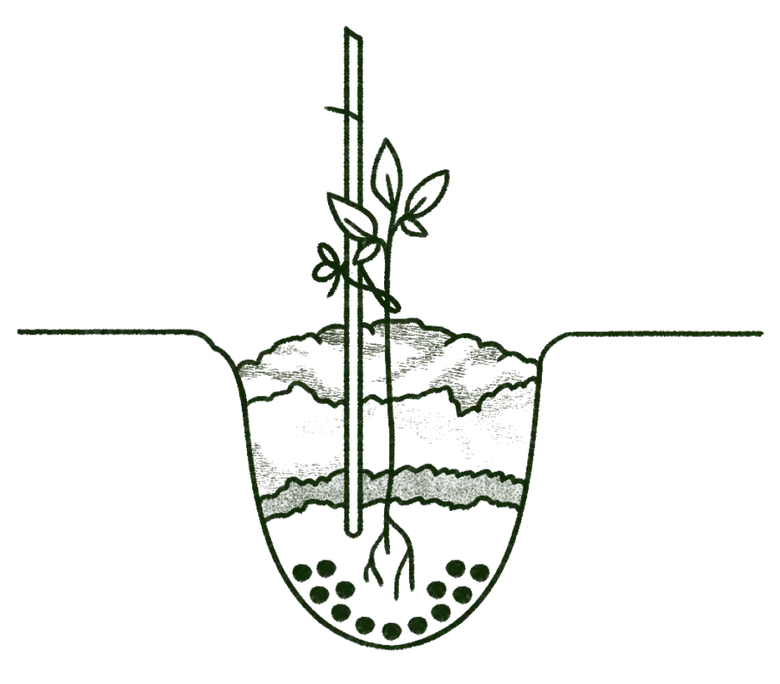
    When planting, it is usually recommended to use a wooden pole with a height of 2 meters and a diameter of 4 cm as a support. We use a bamboo pole 210 cm long and 12−14 mm in diameter. We stick it in next to the trunk after planting. A week after planting, an eight-shaped tie is made in two places. It is better to use a 5 mm cotton tape for this — this is a proven option, so the walnut resists wind gusts at any sail of the crown and grows with a straight trunk.

    A seedling tied to a bamboo stake in a figure-eight loop

Planting schemes

The planting scheme is of crucial importance for the future laying of an industrial orchard. And it depends primarily on the type of your future garden — whether it will be a standard or intensive one

Standard orchard

Uses traditional varieties that have an upper (apical) type of fruiting. These are usually large trees up to 30 m high. They are less demanding, relatively resistant to diseases and lack of moisture, and not so demanding in the use of agrochemicals

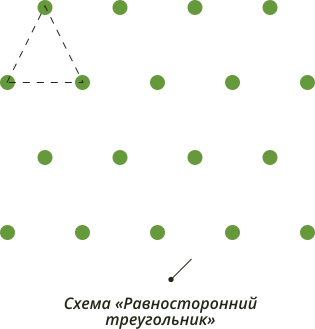
Planting schemes used are10×12 (83 trees/ha), 12×12 (70 trees/ha), and 12×14 (60 trees/ha)

The “Equilateral triangle” scheme: offset rows of seedlings

Intensive Orchard

An orchard planted using lateral fruiting varieties of walnut. These trees bear fruit all along the branches, and their size is significantly smaller, allowing for denser plantings

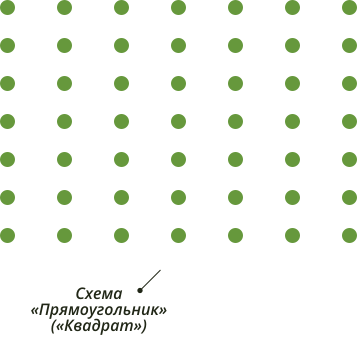
Planting schemes used are7×8 (178 trees/ha), and 8×10 (125 trees/ha)

The “Rectangle” (“Square”) scheme: seedlings in an even grid

About Planting

Intensive plantings are chosen to increase yield per hectare and, correspondingly, reduce the payback period of investments. But this works only in theory. In practice, they are extremely demanding of agricultural technology, require drip irrigation and intensive use of agrochemicals.

They require fertilization throughout the entire growing season and first-class planting material. The geographic region of cultivation is also essential for making a decision — such orchards grow better in countries with a warmer climate and a sum of active temperatures.

Nevertheless, in the Baltic region, standard orchards can be made more productive. To do this, we recommend using varieties and forms that exhibit lateral fruiting by 30−50%. Such hybrids can be planted in an 8×10 scheme, and we offer them for order today

Go to the catalog
Walnut Crown Formation

To obtain a productive walnut tree, the seedling must be properly formed.

The tree crown is formed in two stages: formation of the trunk and formation of the scaffold branches. We recommend making the height of the trunk at 1.5 meters. If you plan to do mechanical harvesting with a shaker in the future, you can increase the height of the trunk to 1.8 meters.

To lay the foundation for a good trunk in the first season of vegetation, green operations in the form of pinching the top of the lateral shoots should be done, allowing the leader to grow. The leader is the strongest shoot that you choose yourself.

At the end of the season, all shoots with pinching are removed, leaving only one vertical branch — this is the very leader and future trunk of the tree. If the height of the leader is less than 1.5 meters, green operations are repeated in the second year of vegetation. The rate of growth of one-year shoots in different regions varies and depends on many factors: the quality of planting material, soil, mineral nutrition, the use of plant protection products, and of course, moisture.

After forming the trunk, the formation of the scaffold branches of the first and in the future, the second and third tiers, begins on the third year

Useful videos on the formation of the crown and trunk:

The main diseases and pests of walnut tree, and methods of combating them

Diseases of the walnut tree can arise for several reasons: due to lack of light, soil poverty, improper care, close proximity of groundwater, excess moisture, and late spring frosts

The list of walnut diseases is very wide, but the most common include:

  • Brown spotting
  • White spotting
  • Bacteriosis

Walnut diseases

Brown spotting (Marssonina blight or Marssonina leaf spot)

One of the most widespread and hazardous diseases of the walnut tree in all regions of its cultivation. It affects leaves, young fruit, and shoots

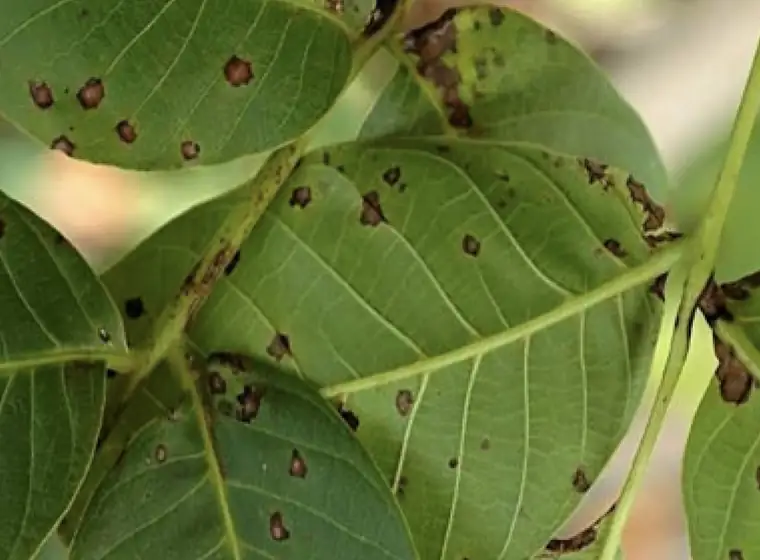
Small round brown spots form on the leaves and then eventually turn gray with a wide brown border. On leaf stalks, they are elongated and dark brown, on the leaf blade itself, they are black. Affected leaves turn brown and fall prematurely.

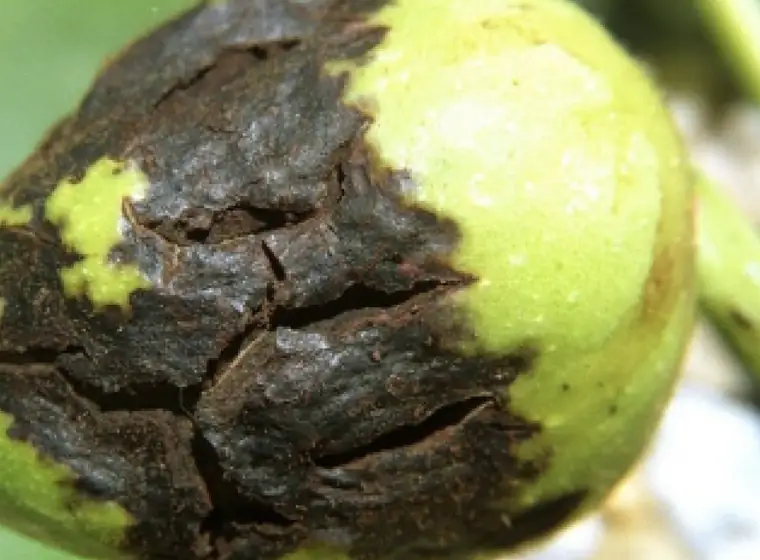
On the fruits, dark brown spots first appear on the husks. The affected tissues of the fruits lag in growth, and deep wounds form on them. The fruits dry out, the weight of the kernel is lost due to dehydration, some of them fall prematurely. Rot of the kernel can be observed, and sulfur-yellow ulcers form on the diseased shoots.

A walnut leaf with brown spots of marssoninaA walnut fruit affected by marssonina

Plants affected by Marssonina blight are exhausted during the summer, enter the winter weakened, and freeze. The percentage of fruit bud formation decreases in them

Disease agent:

The fungus Marssonina juglandis (Lib.) Magn. It has two stages of development: conidial, which allows it to spread during the summer, and ascus. It overwinters in fallen leaves and in affected shoots.

Recommended preventive and treatment measures:

To restrain the development of the disease during the growing season, 2−3 treatments with a 1% Bordeaux mixture are carried out as a preventive measure. In case of an outbreak of the disease, a systemic fungicide Luna experience is used, with 1−2 treatments conducted at an interval of 10−15 days.

About pests

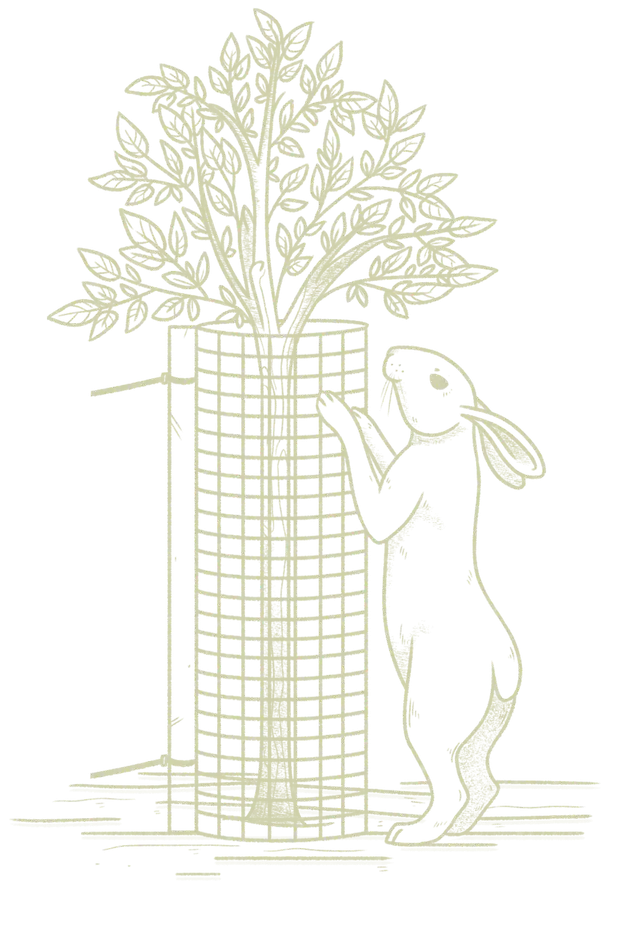
Another serious pest for walnut plantations are animals (deer, rabbits, and small rodents). They damage the young bark of seedlings by gnawing on them in winter.

It is recommended to fence the planting area completely. For this purpose, you can use a self-twisting mesh to protect against rabbits and small rodents, as we do in the nursery. Such fencing effectively protects against animals and does not harm the tree.

Get a consultation

On planting and shaping walnut trees, as well as combating walnut diseases

instagramfacebookyoutubetiktok